
Old Town Summers — The Beauty, Charm, and Challenge of an Older House
- June 21, 2026
Old Town Summers — The Beauty, Charm, and Challenge of an Older House

Editor’s Note: This article was originally published by Out in Old Town. It is republished here with attribution to the original publication.
Cooling historic homes in Old Town Alexandria; Why some of Old Town Alexandria’s most beautiful homes can also be the hardest to cool, balance, and live comfortably in during the summer.
There is a particular walk that tells you everything about why people fall in love with Old Town Alexandria and never quite get over it.
You come up from the waterfront – maybe you’ve wandered along the strand near the Torpedo Factory – and you turn up Prince Street toward Captain’s Row. The cobblestones are uneven underfoot. The brick rowhouses on either side have that color that only comes from two hundred years of weather, sun, coal smoke, and river air. The facades are not identical. They were never meant to be. One is a little narrower. One has a fanlight above the door that belongs in a Federal architecture textbook. One has a rear garden gate visible through a passage so narrow you wonder how furniture ever made it through.
And somewhere behind one of those doors, someone is adjusting the thermostat for the fourth time today. That is Old Town in summer. That, too, is Old Town in summer.
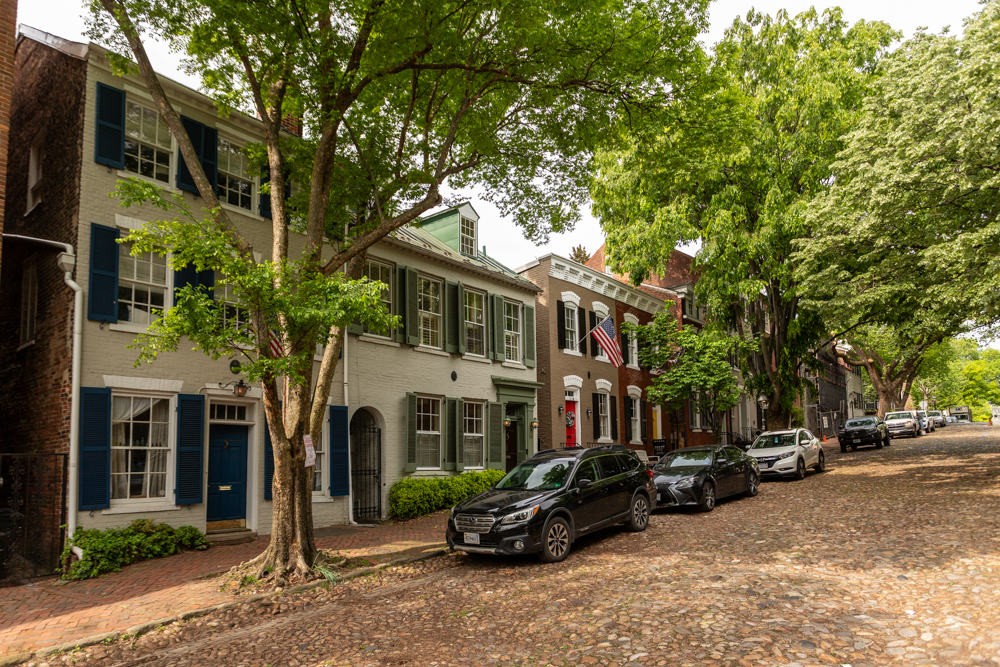
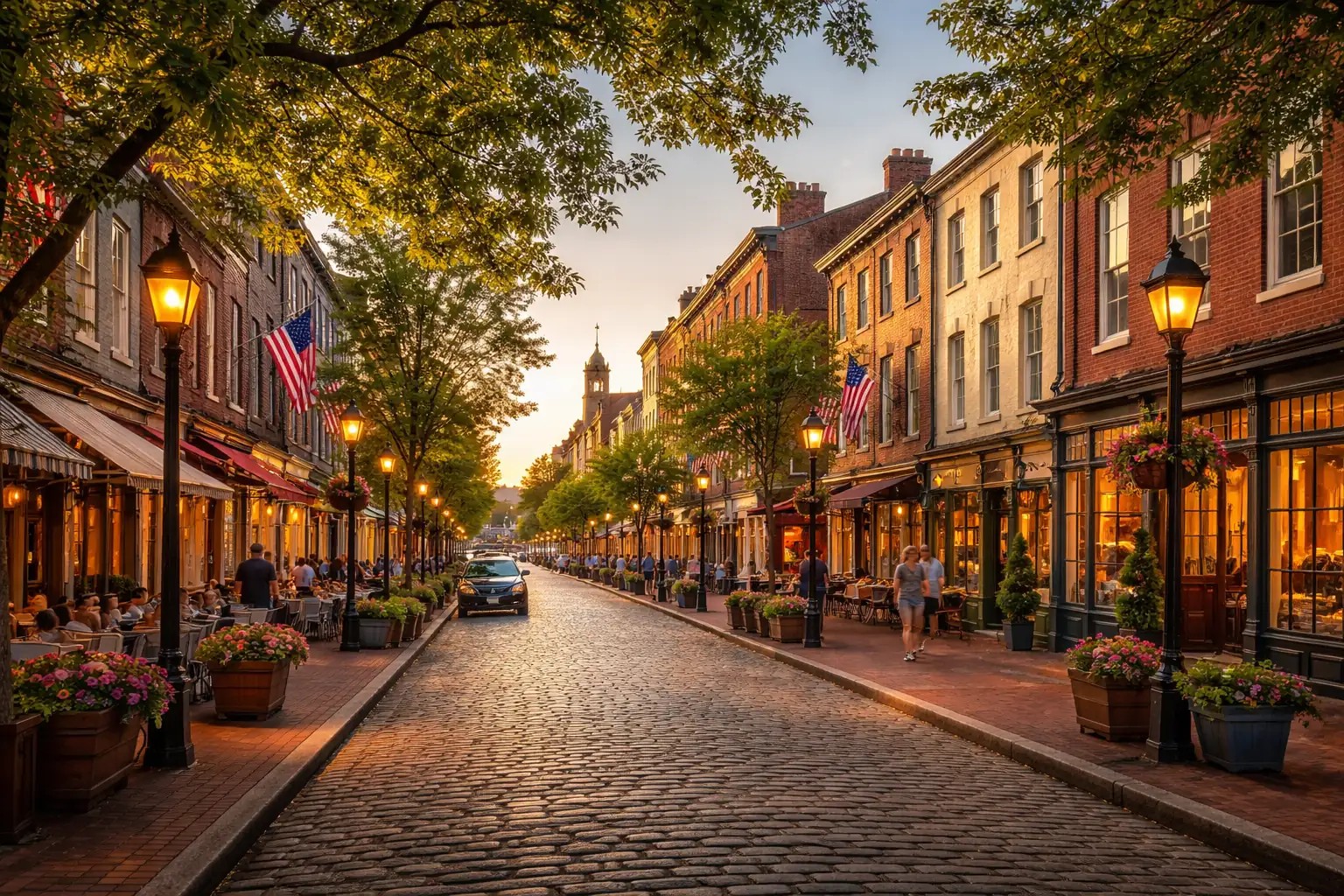
A summer evening view in Old Town Alexandria, where historic brick rowhouses and cobblestones capture the neighborhood’s beauty – and the quirks of living in an older home.
The Flemish bond brickwork on a Federal-period home along Cameron Street or South Fairfax Street is not decorative. It is just how they built things then; with craft, patience, and material meant to outlast everyone involved. The narrow staircases, the plaster walls, the fireplaces in rooms where no modern builder would ever put one – these are not inconveniences dressed up as charm. They are evidence of a more deliberate way of making a place to live.
Old Town’s rowhouses are dense with that kind of accumulated character. The deep lots on Queen Street. The hidden rear courtyards off the alley blocks near South Lee Street. The additions connecting main houses to what were once separate kitchen buildings, now absorbed into daily family life. Houses that have been evolving, slowly and imperfectly and beautifully, for a hundred and fifty years.
If you live in one of them, you already know all of this. You chose it. And you would choose it again.
But summer has a way of testing that conviction.
Here is what takes most Old Town homeowners a while to understand, and what even some contractors never quite say clearly: the comfort problems in these houses are almost never just an HVAC problem.
They are a house problem. They are the kind of problem only an old house can create; one built in layers over a century and a half. Treating them like a simple equipment question is how homeowners end up replacing systems that were not really the issue, spending serious money, and arriving at the following August with the same stubbornly warm upstairs bedroom and the same clammy afternoon air.
A Federal-era rowhouse on Cameron Street and a Victorian a few blocks over on Wolfe Street may look like neighbors and have almost nothing in common mechanically. A narrow three-story on Princess Street behaves very differently from a wider home with a large rear addition off Duke Street. And summer is when that truth becomes impossible to ignore.
The patterns are ones most longtime residents recognize. Older masonry absorbs heat through the day and releases it slowly through the evening — the house on South Lee Street that feels reasonable at noon and stubborn at eight o’clock at night. Upper floors that trap heat in ways the rest of the house doesn’t, getting worse in homes with older insulation or attic-adjacent rooms. Rear additions — those expanded kitchens and family rooms attached long after the original structure was built — that look integrated but behave like separate buildings mechanically, with the front parlor and the back addition running on entirely different thermal logic.
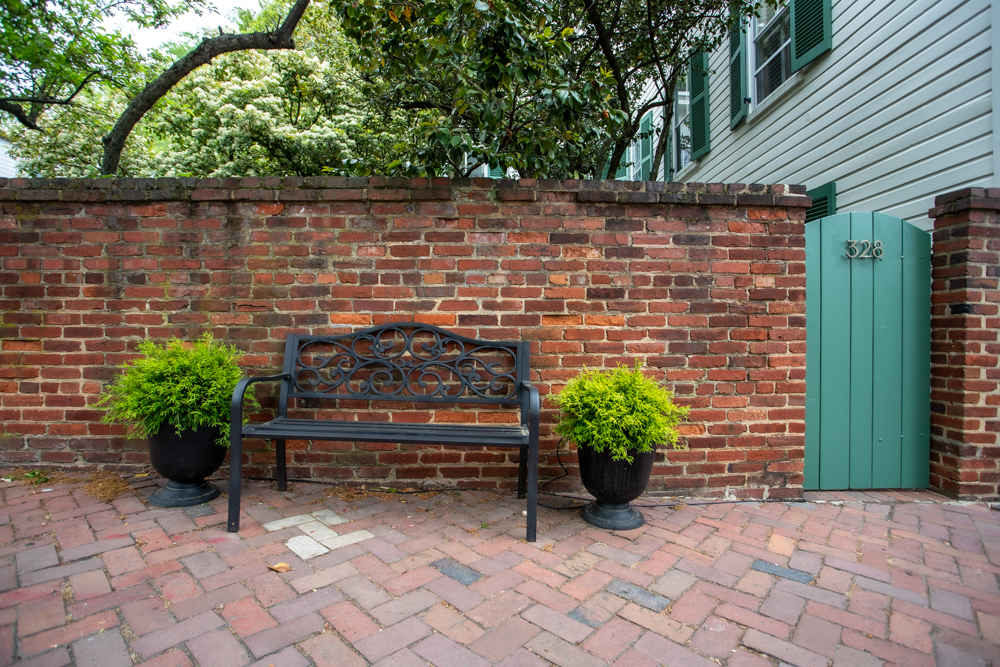
Many of Old Town’s most beautiful spaces are hidden behind the street facing façade in rear courtyards, old additions, and homes shaped over generations.
And then there is humidity, which in Old Town deserves more attention than it usually gets. The neighborhood sits in a river basin. The Potomac is right there. The low-lying blocks between the waterfront and King Street sit in air that moves differently than higher ground further inland toward Rosemont or north in Beverley Hills. A house can be technically 71 degrees and feel sticky and wrong. The same house at 74 degrees on a drier day can feel entirely comfortable. Temperature is only half the comfort story. Moisture is the other half, and it is the half that gets ignored most often.
Many of the Federal and Victorian rowhouses along Prince Street, King Street, and the quieter blocks off Cameron and Wolfe were built before central heating was common, let alone central air. The original comfort system was a fireplace in every room — the flues still visible in the masonry of many homes today. When central HVAC eventually arrived, mostly in the second half of the twentieth century, it came as a retrofit into buildings that were never designed to receive it. Chimney chases became improvised duct routes. Returns were squeezed wherever space allowed, which was often not where they should have been. The result technically worked. Whether it worked well is a different question — and one most homeowners inherit without realizing it.
And then there is the layer that makes Old Town genuinely different from any generic old-house conversation: historic review.
Parts of Old Town — particularly the historic core running from the waterfront up toward Washington Street — fall within the Old & Historic Alexandria District. Within that district, exterior changes visible from public ways may require review through the City of Alexandria Board of Architectural Review, the BAR. That means some comfort decisions are not just mechanical decisions. They are placement decisions, visibility decisions, and in some cases decisions with a formal approval process attached.
The Parker-Gray Historic District, covering much of the neighborhood around Alfred, Wythe, and Church Streets, carries its own protections. Individual landmark properties carry additional layers. A homeowner on South Royal Street faces different constraints than one on West Glebe Road. This is the insider piece that separates a real Old Town HVAC conversation from anything written for a generic audience — and it is exactly why a contractor who knows these streets, these building types, and this review environment is worth far more than one who doesn’t.
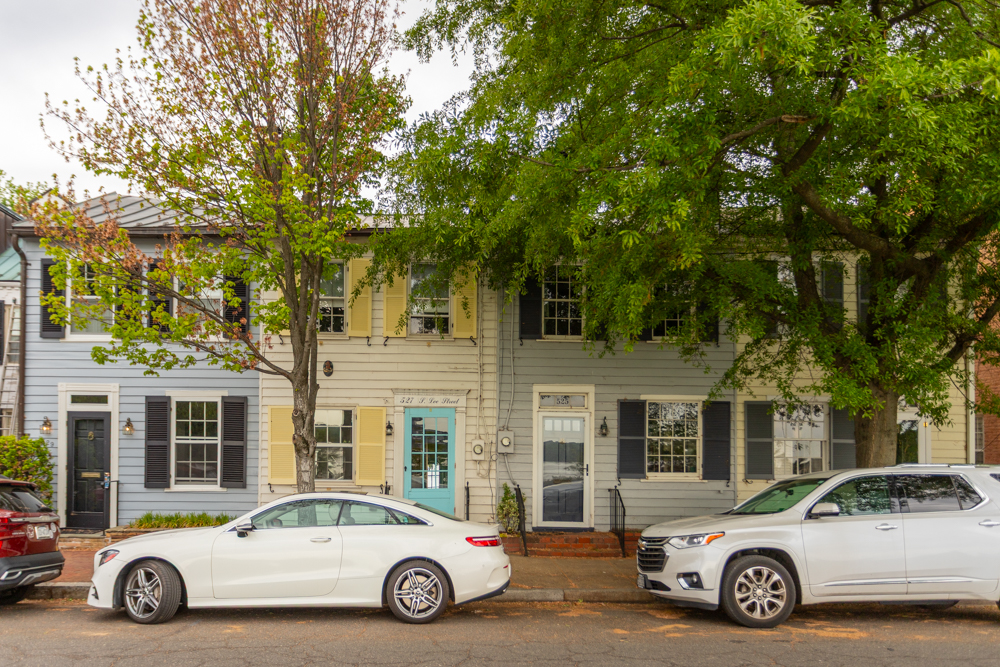
In Old Town, homes that look uniform from the street often behave very differently inside, especially when heat, upper floors, and rear additions come into play. Image Credit – Redfin.com
The right starting point is not “what unit do I need?” It is “what is this house actually doing?”
That means a real load calculation, not a rule-of-thumb estimate, but an analysis of the actual house. It means looking honestly at airflow, return paths, and whether the existing duct network is serving the house or working against it. It means treating humidity as a primary variable, not a footnote.
In the world of Old Town Alexandria HVAC, that matters more than many homeowners realize. Plenty of companies will size a replacement based on what is already there, and some will even charge extra to run the numbers properly. But when you are making a 15-year decision for an older home, a real Manual J load calculation is not a luxury. It is one of the few ways to know the system is actually being sized for the house you have, not the one someone assumes you have.
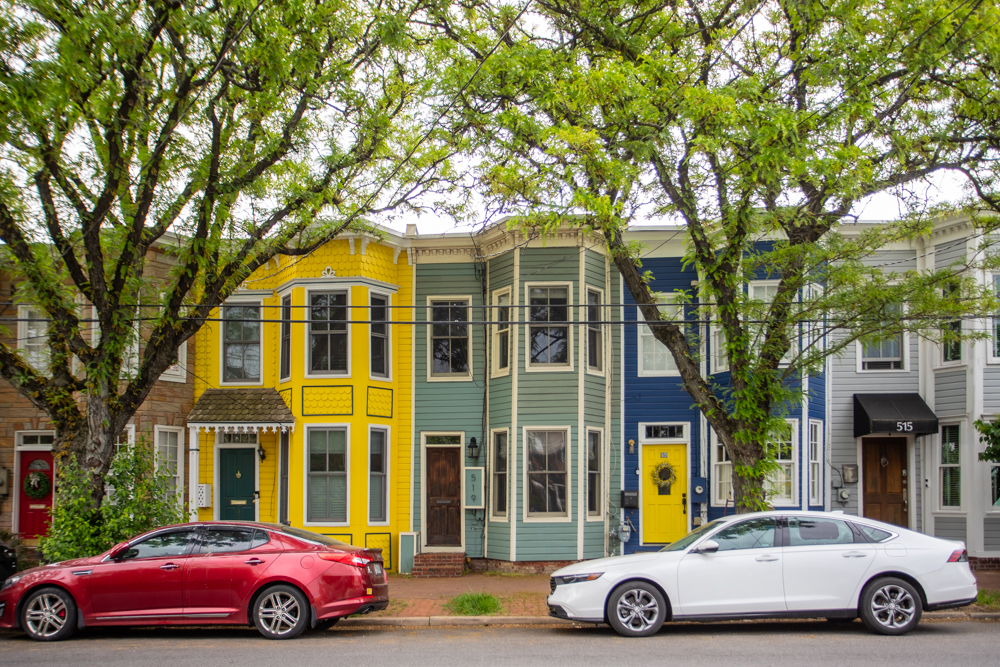
In Old Town, what you can change is not always just a construction question — it can also be a visibility and historic district question.
From there, the solutions vary by house. Sometimes the right answer is a properly designed central system, actually sized for the home as it exists today, with corrected duct paths and honest return placement. Sometimes ductwork improvements alone transform the comfort profile without replacing a single piece of equipment. Ductless mini-splits, with their minimal wall penetrations and room-by-room control, have become one of the most sensible tools for historic Old Town homes precisely because they work with the house rather than trying to overpower it. Whole-home dehumidification, given Old Town’s river-basin humidity, can make a more dramatic difference than almost any equipment swap.
The most predictable bad outcome is also the most common one: the old system fails, a replacement is quoted, and the path of least resistance is to install something similar and move on. In older masonry homes, oversized systems short-cycle; they cool the air quickly, satisfy the thermostat, and shut off before removing meaningful moisture. The result is a house that is technically at temperature and still feels wrong. An improperly sized new system that was supposed to save on monthly bills actually increases them. This is often avoidable. But it requires asking better questions before the decision is made, not after.
- Was a real load calculation done?
- Are ductwork and returns being evaluated, not just the equipment?
- Is this a system problem or a house problem?
- Would zoning or a less invasive solution address the actual complaint more honestly?
- Are BAR constraints part of the plan from day one?
Old houses do not reward shortcuts. But they often respond well to patience, curiosity, and a smarter plan.
These homes were built with beauty, proportion, and permanence in mind, and that is part of what still makes them so compelling today; but they were never designed to be effortless. That is part of their difficulty, and if you are honest with yourself, probably part of their appeal. The improvements that work best start from understanding what the house actually is: where it holds heat, where it breathes, where it struggles, rather than trying to force it into being something it never was.
By the time the heat finally breaks after sunset in late August, when the neighborhood exhales and the cobblestones on Prince Street cool down and the old facades along South Lee Street soften in the evening light, most people who live in these houses feel something close to gratitude. For the neighborhood. For the architecture. For the particular quality of life that only Old Town seems to offer.
The thermostat frustrations of the afternoon are real. So is everything else.
And most people, given the choice, would not trade a square foot of it.
What to Ask Before You Replace: 5 Smart Questions to Ask Before Replacing HVAC in an Old Town Home
- Was a proper load calculation done – not an estimate, but a real Manual J analysis?
- Are ductwork and return airflow being evaluated, not just the equipment?
- Is this a system problem, or a house problem?
- Would zoning, ductless equipment, or a less invasive approach make more sense?
- Are Old Town’s historic review constraints part of the plan from the beginning?