
Heat Pump vs Gas Furnace in Northern Virginia: Costs, Comfort & Cold Weather
Northern Virginia • Heating system buying guide
If you're replacing your heating system in Northern Virginia, both an electric heat pump and a natural gas furnace can keep your home comfortable through winter. The better choice depends on your existing equipment, utility rates, installation costs and how much heat your home needs during freezing weather.
The short answer
A modern cold-climate heat pump can heat and cool many Northern Virginia homes year-round. A gas furnace remains a sensible option, especially where natural gas service and a compatible air conditioner already exist. A third option, dual fuel, combines a heat pump with a gas furnace.
The decision comes down to more than which technology is more efficient. Compare the cost of delivered heat, the system's low-temperature performance and the full installation scope.
Heat Pump vs Gas Furnace: The Key Differences
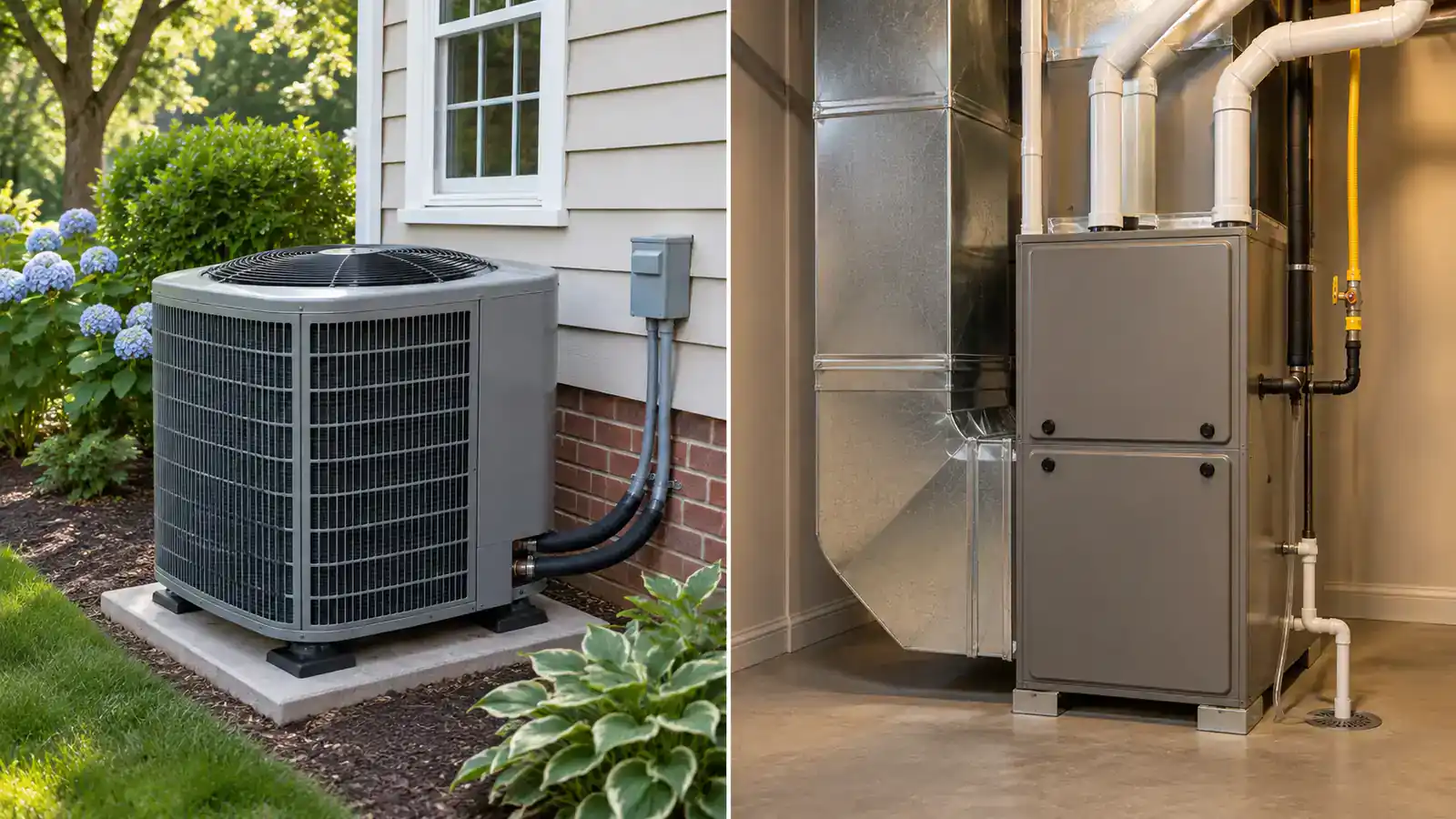
A heat pump transfers heat rather than generating it through combustion. In winter, it absorbs heat from outdoor air and moves it indoors. During summer, it provides air conditioning by reversing the refrigeration cycle.
A gas furnace burns natural gas to heat the air moving through your ductwork. For summer cooling, it ordinarily operates alongside a separate central air-conditioning system.
| Factor | Electric heat pump | Gas furnace with AC |
|---|---|---|
| Heating energy | Electricity | Natural gas |
| Summer cooling | Included | Separate AC equipment |
| Winter performance | Varies by model and temperature | Heating output less sensitive to outdoor temperature |
| Efficiency measure | HSPF2 and COP | AFUE |
| Supplemental heat | May be needed, depending on design | Furnace supplies primary heat |
| Infrastructure | Electrical capacity, ducts and controls | Gas supply, venting, ducts and AC compatibility |
| Operating expense | Electricity rate and actual COP | Delivered gas rate and AFUE |
AFUE measures how efficiently a furnace converts fuel energy into usable heat over standardized testing. HSPF2 measures seasonal heat-pump heating efficiency. COP, or coefficient of performance, describes heat delivered relative to electrical energy consumed under particular conditions.
These ratings measure different things. A high efficiency number on one system cannot be compared directly with a differently defined rating on another.
Can a Heat Pump Handle Northern Virginia Winters?
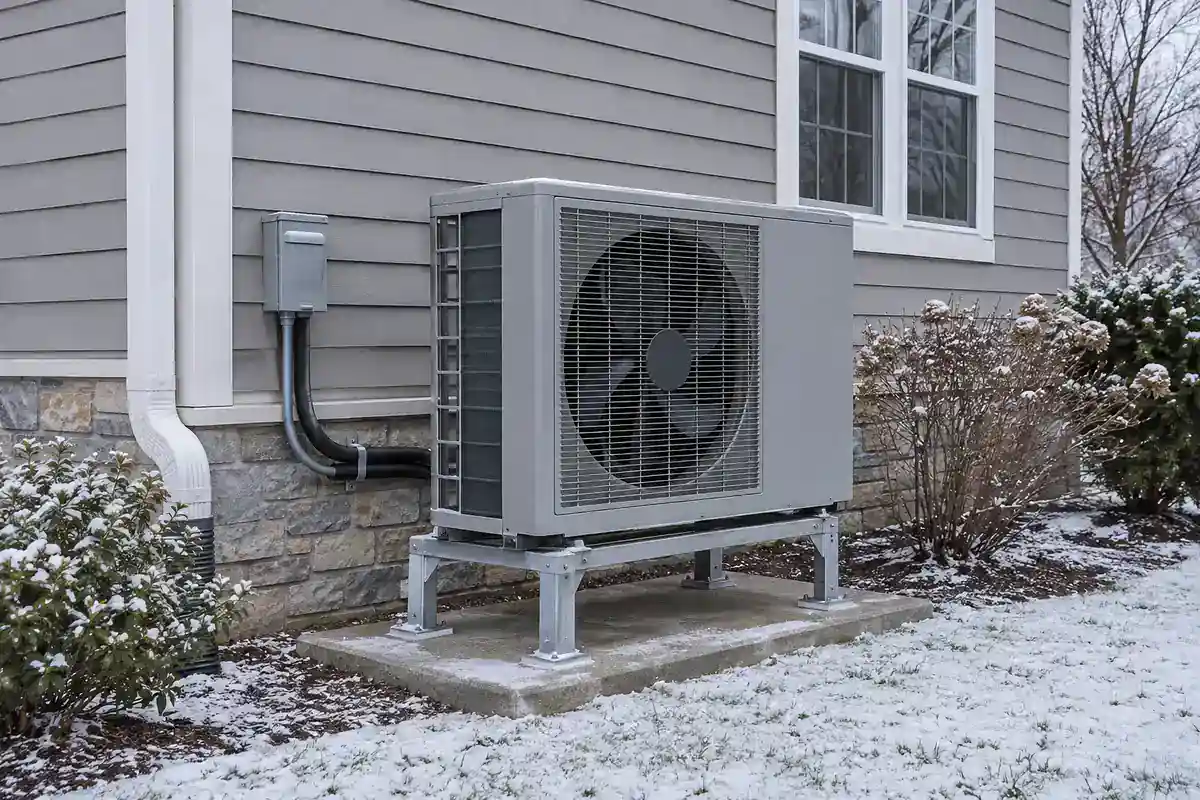
Yes, if the equipment is selected to meet the home's heating requirements. Northern Virginia experiences many moderately cold winter days, which can make heat pumps practical. But the region also has freezing nights and occasional severe cold.
Normal January low near Alexandria. Reagan National Airport's 1991–2020 January average low is 30.1°F, with an average high of 44.8°F, according to the National Weather Service. These are climate averages, not design temperatures for an individual home.
What happens when temperatures fall to 5°F?
Cold-climate heat pumps are designed to maintain useful heating performance at low outdoor temperatures. Under ENERGY STAR's cold-climate criteria, qualifying equipment must demonstrate a COP of at least 1.75 at 5°F and heating capacity at 5°F of at least 70% of its rated heating capacity at 47°F.
Those test thresholds do not mean every qualifying heat pump can heat every house without backup. A homeowner still needs to know whether the proposed equipment can supply enough heat at the local winter design temperature.
The Department of Energy's cold-climate heat-pump sizing guidance explains the importance of matching low-temperature equipment output to the building's heating load.
Why the house matters as much as the equipment
An older Alexandria house with air leakage, inadequate insulation or poorly designed ducts can need more heat than a better-insulated home of similar size. A correctly sized system also needs adequate airflow to deliver comfort throughout the house.
Some heat pumps use electric resistance heaters for supplemental or emergency heat. Others can be designed to meet the full heating load without electric backup. A replacement proposal should identify the heating load, the proposed unit's low-temperature capacity and any supplemental-heating requirements.
Which Costs Less to Operate in Northern Virginia?
It depends on electricity prices, natural gas delivery charges and how efficiently the equipment operates. A heat pump can use less purchased energy while still costing more to run when electricity is comparatively expensive.
Comparing the listed price of a kilowatt-hour with the price of a therm is misleading because they contain different amounts of energy.
What Dominion Energy and Washington Gas charge
Dominion Energy's published residential reference describes a typical basic residential electricity rate of approximately 16–18 cents per kWh. The applicable rate and bill composition depend on the customer and tariff.
Washington Gas's November 2026 published purchased-gas charge for Virginia residential customers is $0.6512 per therm. That is a gas-supply charge, not the complete delivered cost; distribution charges and applicable riders also matter.
For a fair comparison, use the variable cost of electricity and delivered natural gas from your actual bills.
Original, reproducible calculation
What Does 100,000 Btu of Useful Heat Cost?
To compare the fuels on equal terms, start with the amount of heat delivered into the home, not the purchase price of each unit of energy.
Illustrative assumptions, not November 2026 household tariffs:
| Heating option | Performance | Cost / 100,000 Btu delivered |
|---|---|---|
| Heat pump | COP 2.0 | $2.64 |
| Heat pump | COP 2.5 | $2.11 |
| Heat pump | COP 3.0 | $1.76 |
| Heat pump | COP 3.5 | $1.51 |
| Gas furnace | 95% AFUE | $1.58 |
With these example prices, a heat pump above this COP costs less for the same useful heat. Below it, the modeled gas furnace costs less.
Gas furnace: $/therm ÷ AFUE
Conversion basis: U.S. Energy Information Administration, 1 kWh ≈ 3,412 Btu and 1 therm = 100,000 Btu. Illustrative variable prices use no claimed customer-bill data.
Limitations: Excludes fixed customer charges, installation and maintenance, furnace electricity use, defrost energy, backup heat and seasonal variations in COP. This is a condition-specific comparison, not a prediction of annual savings.
What if you eliminate natural gas entirely?
If you no longer need gas for heating, cooking, water heating or other appliances, discontinuing gas service might eliminate its recurring customer charge. If the home keeps gas for other uses, that fixed charge generally remains. This can change the long-term economics of electrification even when one fuel has a lower modeled cost per unit of useful heat.
When an Electric Heat Pump Makes More Sense
An all-electric heat pump is worth serious consideration when both the furnace and air conditioner need replacement. It provides heating and cooling and can eliminate the need for a gas furnace.
It may be attractive when natural gas is unavailable, the home already uses electric heating, the proposed heat pump meets the heating load, electrical infrastructure is suitable, or eliminating gas service is a household goal.
Heat pumps may be especially efficient during relatively mild winter conditions when their COP is high. But replacing a gas-based system may require electrical changes, a matched indoor unit, new controls or supplemental heating provisions. Those costs belong in the comparison.
When a Gas Furnace Is the Better Choice
Keeping gas heat may make more sense when a home already has reliable gas service and the furnace can be replaced without changing otherwise serviceable cooling equipment.
For example, if an existing furnace needs replacement but the central air conditioner remains relatively new, a compatible furnace may involve a smaller project than converting the complete system to electric heating.
Still, existing infrastructure does not guarantee an easy swap. A higher-efficiency condensing furnace may require different venting and condensate drainage; older ducts may need attention. Gas furnaces also need electricity for fans and controls and should not be assumed to heat a home during an outage.
What About a Dual-Fuel Heat Pump and Gas Furnace?
A dual-fuel configuration pairs an electric heat pump with a compatible gas furnace. The heat pump provides cooling and heating during selected conditions; controls switch to the furnace when the chosen operating strategy calls for it.
It may appeal to homeowners who want heat-pump efficiency during milder weather without giving up gas heating. But compatible equipment, controls and installation costs matter. There is no universal temperature at which switching to gas becomes the cheapest choice.
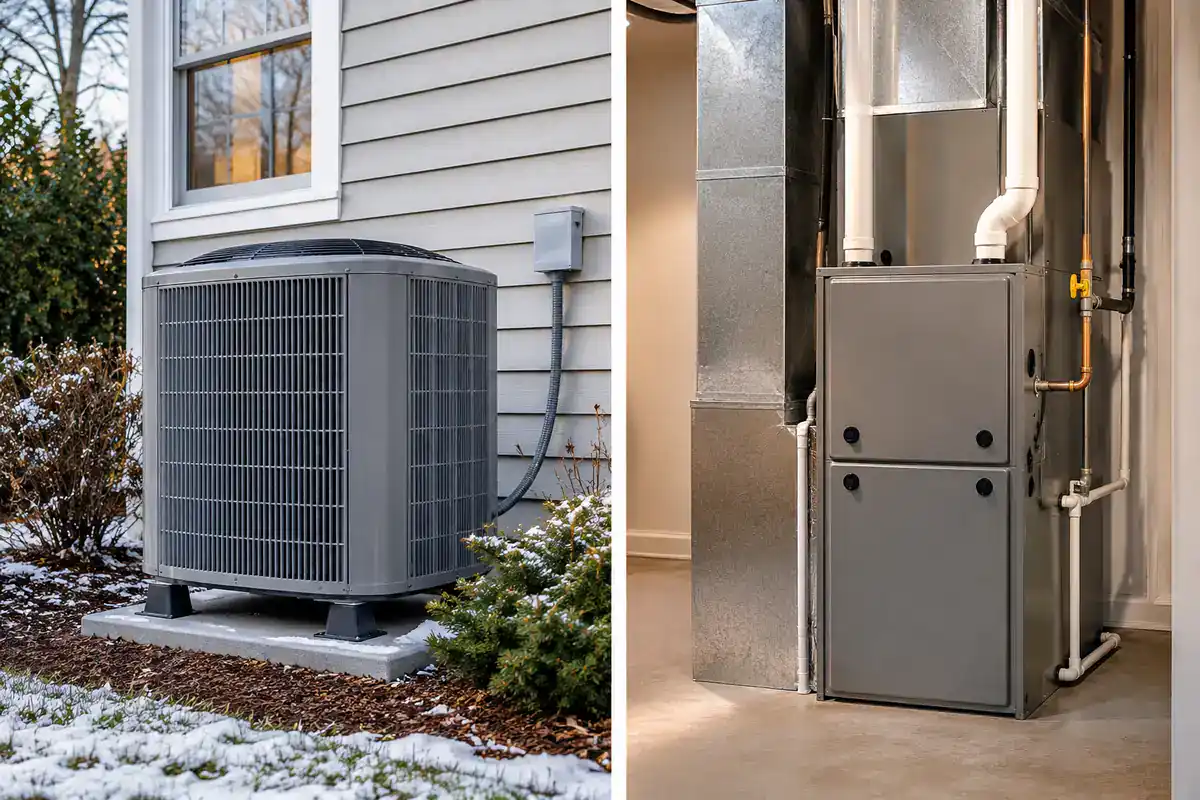
Integrity's dual-fuel HVAC guide explains how hybrid systems operate and how heating changeover decisions are made. For a replacement project, compare a conventional gas furnace and AC, an all-electric heat pump, and a dual-fuel configuration on the same written scope when practical.
Installation Costs: What Actually Changes the Quote?
Equipment prices alone do not provide a fair comparison. Replacing an existing gas furnace is a different job from installing an all-electric heat pump in a home requiring electrical or duct modifications.
Heating and cooling loads
A professional load calculation establishes the home's heating and cooling needs. The previous equipment's size should not automatically determine the replacement size.
Ductwork and airflow
Heat pumps, furnaces and air conditioners all depend on appropriate air delivery. Restrictive returns, undersized ducts or poor airflow can undermine comfort regardless of the heating technology.
Existing electrical and gas systems
All-electric installations may require electrical circuit or panel evaluation. Gas systems may require compatible venting, combustion-air provisions and condensate management.
Equipment matching and controls
Compare complete, compatible systems rather than assuming a new outdoor unit works with any indoor equipment. Request efficiency ratings, low-temperature heating output, warranty terms, required permits and commissioning information.
For a full discussion of replacement scope, see Integrity's HVAC installation and replacement services in Alexandria.
For repair, maintenance and other heating or cooling needs, explore Integrity's HVAC Services in Alexandria.
Heat Pump Rebates and Tax Credits in Virginia: November 2026
Incentives can change the economics of a replacement, but do not deduct an unapproved or expired program from an installation proposal.
The former federal heat-pump tax credit has ended
The federal Energy Efficient Home Improvement Credit (Section 25C) previously offered tax benefits for qualifying heat-pump installations. The Internal Revenue Service confirms that the credit applies only to qualifying property placed in service before January 1, 2026. A heat pump newly placed in service during 2026 does not qualify for that former credit.
Virginia's HOMES and HEAR rebates have not launched
As of November 29, 2026, the Virginia Department of Energy says the HOMES and HEAR rebate programs are not available. Updated application materials were submitted in September, but federal approval and final access procedures remain pending.
Proposed programs could support qualifying heat-pump projects after launch, but eligibility is not guaranteed. Virginia Energy also cautions that certain appliance rebates cannot be used retroactively and that projects started early may not qualify. Check Virginia Energy Connect for programs currently available, and confirm all terms before relying on an incentive.
Which Heating System Fits Your Home?
If your furnace works but the AC needs replacement
Ask whether retaining the furnace makes sense and whether a compatible heat-pump option is practical. A complete system replacement may not be necessary, although equipment compatibility and expected remaining life matter.
If both heating and cooling equipment need replacement
Compare all-electric, gas-and-AC and dual-fuel systems. Request equivalent written proposals that spell out efficiency, capacity, the complete installation scope and required modifications. Model operating costs using the same assumptions.
If rooms stay hot or cold
Cold bedrooms, hot upstairs rooms and persistent airflow problems may stem from insulation, air leakage, ductwork or load distribution. Changing the heating technology without understanding those conditions may leave the underlying problem unresolved.
Before you choose, ask five questions:
- What is the home's calculated heating load at winter design conditions?
- How much heat can the proposed heat pump deliver at low outdoor temperatures?
- What electrical, gas, ductwork or venting changes are included?
- What will each system cost to operate using your actual utility rates?
- What exactly is included in each written installation estimate?
A heat pump can be an excellent choice for a Northern Virginia home, but it is not the right choice for every property. A gas furnace may be less costly to retain or replace when the existing infrastructure is sound. Dual fuel can be worthwhile when the flexibility justifies its additional equipment and installation cost.
The better investment is the system that meets your home's heating and cooling requirements at an acceptable total cost.
Your next step with Integrity
Ready to Compare Your Heating Options?
Replacing a furnace or considering a heat pump? Talk with Integrity Duct & HVAC Services about system choices, installation requirements and a written replacement estimate for your Northern Virginia home.
Diagnostic fees may apply. Free replacement estimates and eligible reviews of another contractor's written major-repair or replacement quote are separate visit types. New troubleshooting or diagnostic testing is not automatically included; applicable charges are explained before work begins. Requesting an appointment does not confirm a booking.