
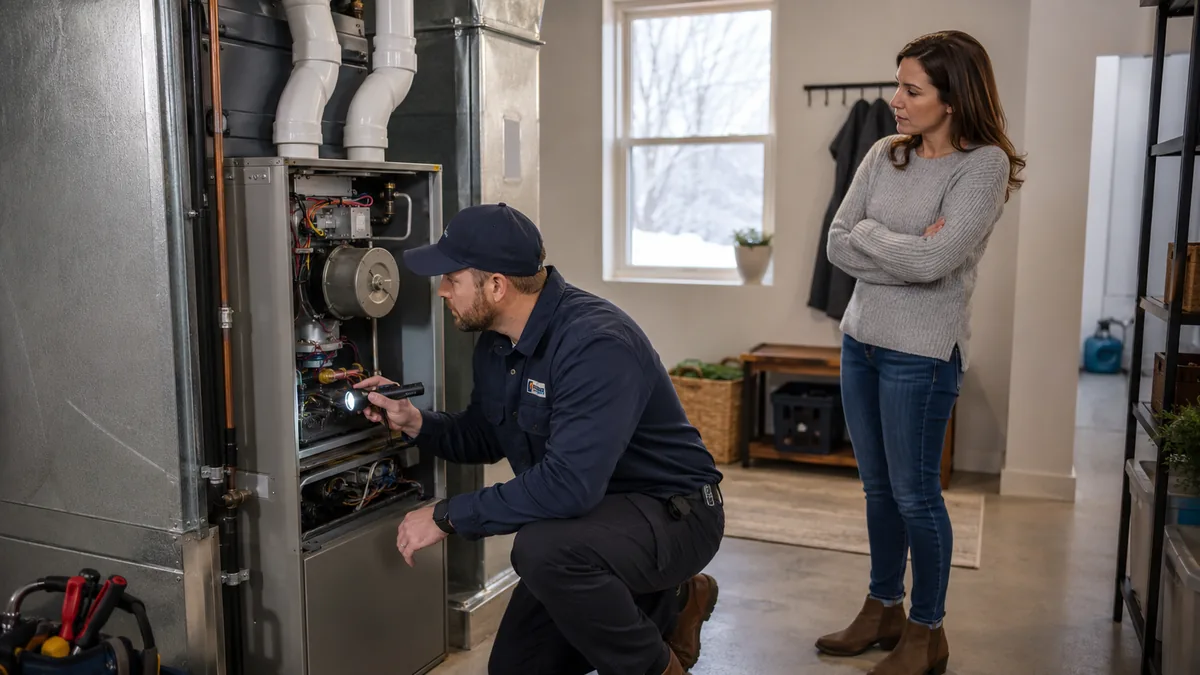
Furnace Blowing Cold Air? 8 Common Causes and What to Do
- July 26, 2026
Furnace Blowing Cold Air? 8 Common Causes and What to Do
When a Northern Virginia cold snap arrives, a furnace blowing cold air can quickly turn an Alexandria home from comfortable to uncomfortably cold. Your furnace may sound like it is operating normally, but the air coming from the vents feels cool, room temperatures continue falling, or the system never reaches the thermostat setting.
Some causes are simple, including an incorrect thermostat setting or dirty air filter. Others involve the ignition system, flame sensor, gas supply, airflow, venting, safety controls, or internal furnace components.
Before assuming the system has failed completely, homeowners can perform several basic checks safely. The key is knowing when a furnace blowing cold air is a minor thermostat or airflow issue—and when it requires professional heating repair in Alexandria, VA.
Written by Integrity Duct & HVAC Services
Reviewed for technical accuracy by Integrity’s NATE-certified HVAC team
Furnace Blowing Cold Air? Check These Four Things First
Before calling for heating repair, complete this quick two-minute troubleshooting checklist:
- Set the thermostat to Heat and the fan to Auto. When the fan is set to On, it can circulate unheated air between heating cycles.
- Inspect the air filter. Replace it if it is visibly dirty, heavily coated, bent, or restricting airflow.
- Verify the furnace power switch is on. It often resembles a standard light switch mounted on or near the furnace.
- Check the electrical panel. Look for a tripped furnace breaker. Reset it only once. If it trips again, leave it off and call for service.
If the system still blows cold air, repeatedly starts and stops, produces unusual odors, or fails to raise the indoor temperature, arrange professional diagnosis.
Why is my Furnace Blowing Cold AIr?
A furnace heats your home by igniting fuel or activating electric heating elements. The blower then moves warmed air through the duct system and into the rooms of your home.
When the heating process is interrupted but the blower continues operating, you may feel room-temperature or cold air coming from the vents.
A furnace blowing cold air may be caused by:
- An incorrect thermostat setting
- A dirty air filter
- Restricted airflow
- Ignition failure
- A dirty flame sensor
- An interrupted gas supply
- Furnace overheating
- A safety shutdown
- Blocked furnace venting
- A condensate drainage problem
- Leaking or disconnected ductwork
- A failed furnace component
The exact cause depends on the furnace type, age, condition, installation, and airflow through the home.
Furnace Running but Not Heating? 8 Common Causes
The Thermostat Fan Is Set to On
The first thing to check when you notice a furnace blowing cold air is the thermostat fan setting.
Most thermostats have two fan options:
- Auto: The blower operates only while the furnace is actively heating.
- On: The blower runs continuously, even when the burners are off.
When the fan is set to On, the furnace may complete a heating cycle while the blower continues circulating unheated air. That air may feel cold even though the furnace itself is operating correctly.
What to do
Set the thermostat to Heat, change the fan setting to Auto, and raise the temperature several degrees above the current room temperature.
Also confirm that:
- The thermostat display is working.
- The batteries are not weak.
- The programmed schedule is not lowering the temperature.
- The thermostat has not been switched to cooling mode.
- The thermostat is not displaying an error message.
If changing the fan setting solves the problem, furnace repair may not be necessary.
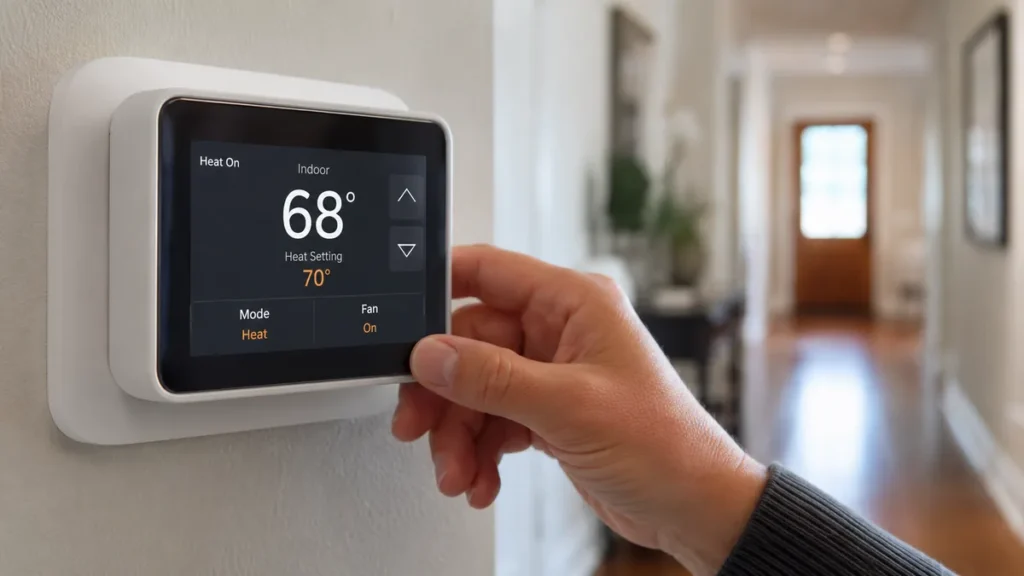
When the thermostat fan is set to On instead of Auto, the blower may circulate unheated air between furnace heating cycles.
The Furnace Is Starting or Finishing a Heating Cycle
A brief burst of cool air can be normal.
When a heating cycle begins, the blower may push a small amount of cooler air that was already sitting inside the ductwork. After the burners shut off, the blower may continue running briefly to move remaining heat out of the furnace.
This is generally normal when:
- The cool airflow lasts only a short time.
- Warm air follows soon afterward.
- The home reaches the thermostat setting.
- Indoor temperatures remain stable.
- The furnace is not repeatedly starting and stopping.
A furnace blowing cold air continuously is not normal. If the air never warms or your home continues getting colder, another problem is likely present.
A Dirty Air Filter Is Restricting Airflow
A clogged filter is one of the most common causes of poor furnace performance.
When dust and debris restrict airflow, heat can build up inside the furnace. The high-limit safety switch may shut off the burners to prevent overheating while allowing the blower to continue operating.
The result is a furnace blowing cold air even though the equipment sounds like it is running.
Other signs of restricted airflow include:
- Weak airflow from supply vents
- Frequent furnace cycling
- Higher heating bills
- Excess dust around registers
- Uneven room temperatures
- A furnace running but not heating effectively
- Whistling around the filter or return grille
- A filter that appears bent or pulled inward
What to do
Turn the system off and inspect the filter. Replace it if it is gray, heavily coated, damaged, or difficult to see through.
Make sure the replacement filter:
- Matches the required dimensions
- Is installed in the correct airflow direction
- Fits securely without large gaps
- Has an appropriate filtration rating for the system
Regular HVAC maintenance in Alexandria can help identify dirty filters, airflow restrictions, blower problems, and high-limit shutdowns before they cause a no-heat call.
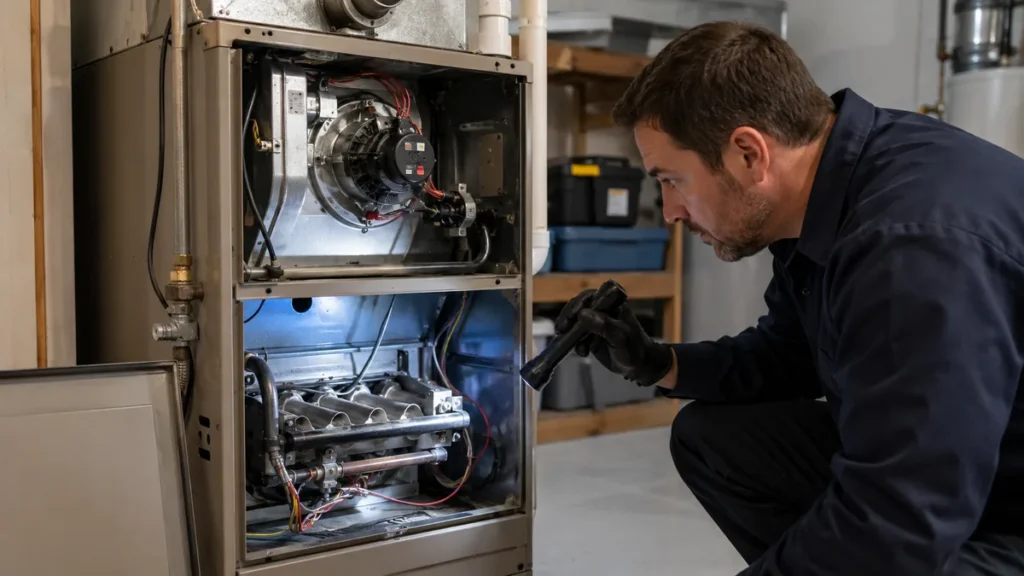
A failed pilot light or furnace ignition system can prevent the burners from lighting, causing the furnace to run without producing heat.
The Ignition System or Pilot Light Is Not Working
A gas furnace cannot produce heat unless the burners ignite.
Older furnaces may use a standing pilot light. Newer systems typically use an electronic ignition system or hot-surface igniter.
If the ignition process fails, the blower may run even though the burners never produce heat. This can result in a furnace blowing cold air throughout the home.
Possible causes include:
- A failed igniter
- A pilot light that has gone out
- A damaged ignition control
- A faulty pressure switch
- A blocked intake pipe
- A blocked exhaust pipe
- A safety lockout after repeated ignition attempts
- A wiring or control-board problem
You may hear the furnace attempt to start several times before it stops trying. Some systems enter a temporary safety lockout after repeated ignition failures.
Do not repeatedly reset the furnace. Repeated ignition failure requires professional diagnosis.
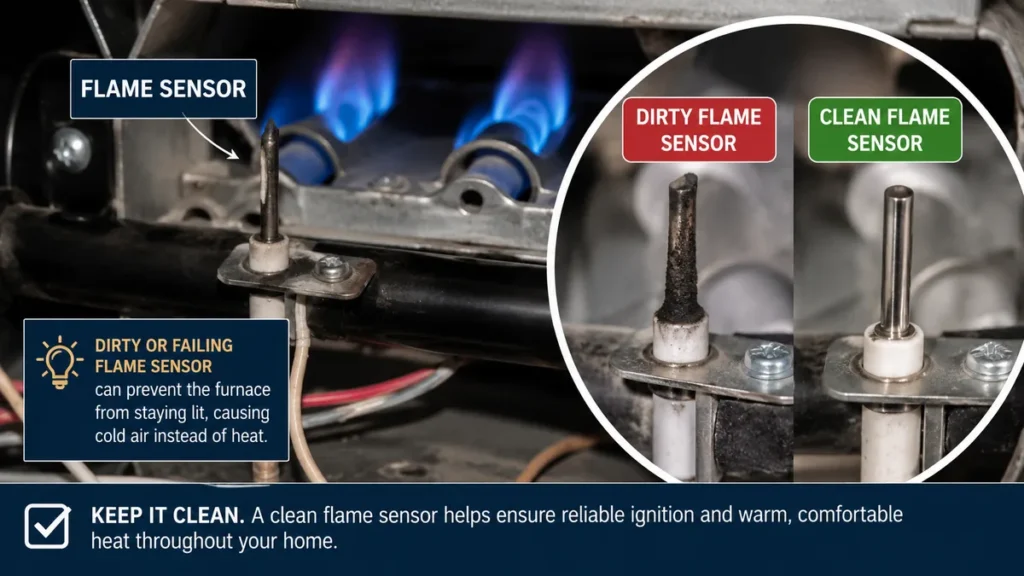
A dirty or failing flame sensor can shut off the burners shortly after ignition, leaving the furnace blower circulating cold air.
The Flame Sensor Is Dirty or Failing
The flame sensor verifies that the burners have ignited properly.
If the sensor cannot confirm a stable flame, the furnace shuts off the gas supply to prevent unburned gas from accumulating. The blower may continue operating, resulting in a heater blowing cold air shortly after startup.
A dirty or failing flame sensor often produces this pattern:
- The furnace begins a heating cycle.
- The burners ignite.
- The flame shuts off after several seconds.
- The blower continues running.
- The furnace attempts another heating cycle.
A technician can inspect and clean the sensor, measure its electrical signal, examine burner operation, and determine whether the flame sensor or another component is causing the shutdown.
Online tutorials sometimes describe flame-sensor cleaning as an easy repair. However, the sensor is part of the furnace’s combustion-safety system.
Improper handling can damage the component or leave a larger ignition, grounding, gas-pressure, burner, or control problem undiagnosed.
The Furnace Is Not Receiving Gas
A gas furnace may run its blower without producing heat if the gas supply is interrupted.
Possible causes include:
- A closed furnace gas valve
- A temporary utility interruption
- A failed gas control valve
- A safety control preventing the valve from opening
- A problem within the home’s gas-delivery system
You can check whether other gas appliances in the home are operating normally. Do not disassemble a gas valve, loosen gas piping, or attempt to repair gas controls.
Important gas and carbon-monoxide warning
For urgent heating failures without a suspected gas leak or active carbon-monoxide emergency, request emergency HVAC repair in Alexandria.
Review the U.S. Consumer Product Safety Commission’s carbon-monoxide safety guidance for information about CO alarms, fuel-burning appliances, warning signs, and steps to protect your household.
Shut down the system and leave the home immediately if you notice:
- A strong natural-gas odor
- Hissing near a gas line
- Soot around the furnace
- A carbon-monoxide alarm
- Headache, dizziness, nausea, confusion, or unusual fatigue affecting occupants
From a safe location, contact the gas utility or emergency services as appropriate.
Do not operate switches, use open flames, or return to the home until it has been declared safe.
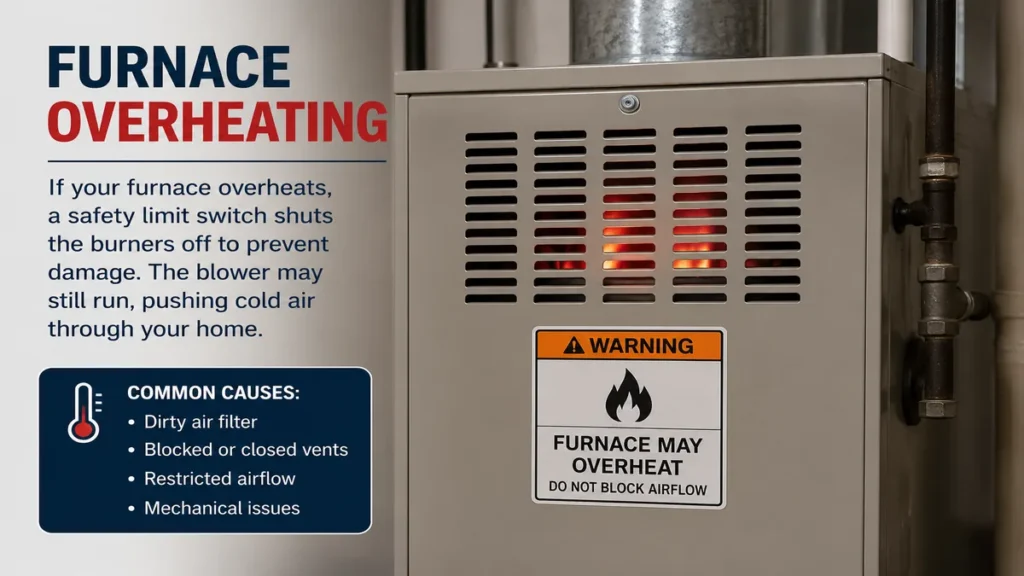
The Furnace Is Overheating
A furnace may overheat when it cannot move enough air across the heat exchanger.
The high-limit safety switch then shuts off the burners while the blower continues operating to cool the equipment. This can leave you with a furnace blowing cold air even though the system repeatedly tries to heat the home.
Potential airflow restrictions include:
- A dirty air filter
- An overly restrictive filter
- Closed supply registers
- Blocked return vents
- A dirty blower wheel
- A failing blower motor
- Incorrect blower-speed settings
- A restricted indoor evaporator coil
- Undersized ductwork
- Damaged or collapsed ducts
- Poorly designed return-air pathways
Do not close multiple supply vents in an attempt to force additional heat into another room. Excessive restriction can increase system pressure, reduce airflow, and contribute to overheating.
Repeated high-limit shutdowns can shorten equipment life and may indicate a serious airflow or safety problem.
If the furnace cycles on and off while the blower keeps running, schedule heating service promptly.
A Condensate, Venting, Ductwork, or Mechanical Problem Is Present
High-efficiency furnaces create condensation during normal operation.
If the condensate drain, trap, or pump becomes blocked, a safety switch may stop the heating cycle. The furnace blower may continue operating even though the burners are no longer producing heat.
A furnace blowing cold air may also be caused by:
- A blocked intake or exhaust pipe
- A failed pressure switch
- A frozen or clogged condensate drain
- A failed condensate pump
- A malfunctioning control board
- Loose or damaged wiring
- A failing blower assembly
- A cracked or disconnected duct
- Significant duct leakage
- A damaged furnace access-panel switch
- An incorrectly installed thermostat
Duct leaks can allow heated air to escape before it reaches your living space. They can also pull cold air from an attic, crawlspace, basement, garage, or utility area into the system.
This is particularly relevant in Northern Virginia homes with:
- Attic air handlers
- Crawlspace ductwork
- Finished additions
- Older basement systems
- Converted garages
- Ducts altered during renovations
- Long duct runs serving upper floors
A technician may need to inspect both the furnace and the duct system to identify the actual cause.
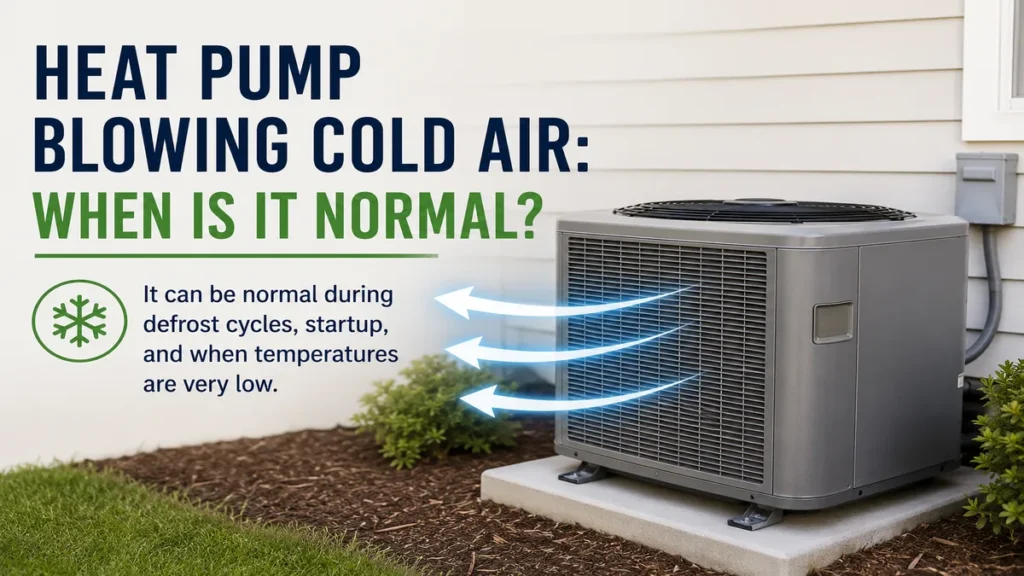
A heat pump may briefly blow cooler air during a defrost cycle, at startup, or during very cold weather.
Heat Pump Blowing Cold Air: When Is It Normal?
A heat pump operates differently from a gas furnace.
Heat pumps commonly deliver air that feels warm rather than hot. During cold weather, the supply air may feel cool against your skin even when it is warmer than the room.
That sensation alone does not necessarily mean the system has failed.
A heat pump blowing cold air can also be normal temporarily during a defrost cycle. When frost forms on the outdoor coil, the system briefly reverses operation to melt the ice. Auxiliary heat should help limit the temperature change indoors.
Persistent cold air from a heat pump may indicate:
- The thermostat is set to Cool instead of Heat
- Auxiliary heat is not operating
- The outdoor unit is not running
- Refrigerant is low
- The reversing valve is malfunctioning
- The outdoor coil is heavily iced
- A thermostat sensor has failed
- A control-board problem is present
- The electric backup heat is not energizing
- A breaker for the indoor or outdoor equipment has tripped
If the system cannot reach the thermostat setting, do not assume every instance of cool airflow is a normal defrost cycle.
Cold Air Coming From Vents? Safe Checks Before Calling for Repair
When you have a furnace blowing cold air, complete these homeowner-safe checks:
- Confirm the thermostat is set to Heat.
- Set the fan to Auto.
- Raise the set temperature several degrees.
- Replace a visibly dirty air filter.
- Open supply registers throughout the home.
- Make sure furniture, rugs, curtains, and boxes are not blocking return vents.
- Check the electrical panel for a tripped breaker.
- Confirm the furnace power switch is on.
- Look for obvious blockage around outdoor intake and exhaust pipes.
- Confirm the furnace access panel is fully closed.
- Record any blinking fault-code sequence.
- Note unusual sounds, odors, or the point in the heating cycle when the air turns cold.
Do not:
- Bypass a safety switch
- Open a sealed combustion compartment
- Repeatedly reset breakers
- Dismantle gas controls
- Alter furnace wiring
- Block an intake or exhaust pipe
- Work on live electrical components
If a breaker trips a second time, leave it off. Repeated tripping can indicate an electrical fault that requires professional service.
Heater Blowing Cold Air? When to Call for Furnace Repair
Call for professional heating repair when:
- The burners ignite and quickly shut off.
- The blower runs but no heat is produced.
- The furnace repeatedly starts and stops.
- A clean filter does not solve the problem.
- The system displays a diagnostic fault code.
- The breaker trips repeatedly.
- The furnace makes banging, grinding, buzzing, scraping, or squealing sounds.
- The home cannot reach the thermostat setting.
- You smell gas.
- A carbon-monoxide alarm activates.
- The furnace has experienced repeated failures.
- The outdoor heat-pump unit remains heavily iced.
- You suspect an ignition, gas, flame-sensor, blower, venting, or control-board problem.
A qualified technician can evaluate:
- The ignition sequence
- Gas pressure
- Temperature rise
- Electrical components
- Flame-sensor operation
- Safety switches
- Furnace venting
- Condensate drainage
- Blower performance
- System static pressure
- Duct condition
- Thermostat operation
A complete diagnosis matters because a furnace blowing cold air is a symptom, not a single repair.
Replacing one component without identifying the underlying cause can leave an airflow, combustion, venting, ductwork, or control problem unresolved.
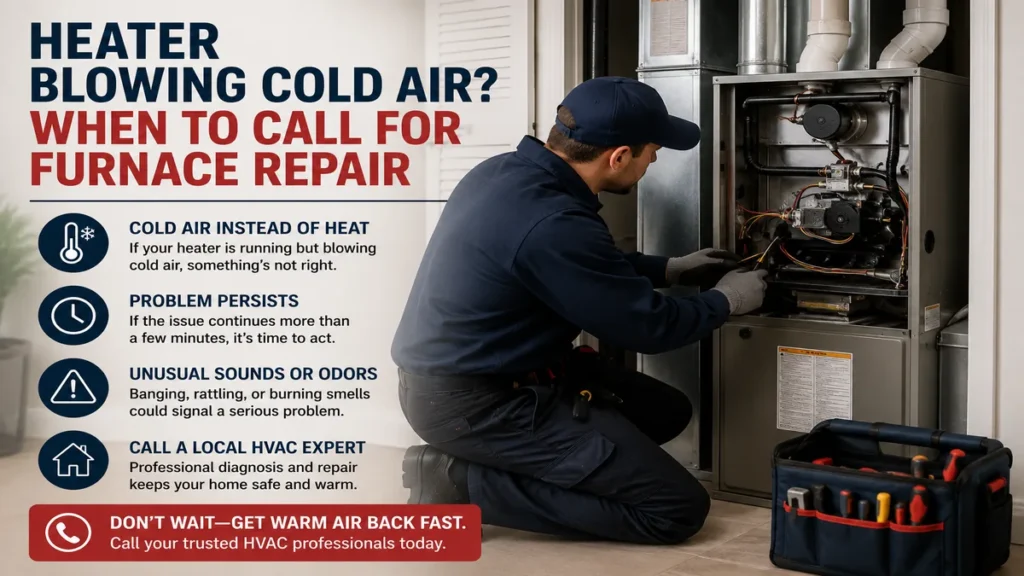
Call for professional furnace repair when cold airflow continues, the system repeatedly cycles, or unusual sounds, odors, or heating failures occur.
Furnace Blowing Cold Air in Alexandria and Northern Virginia Homes
Heating problems often become obvious during the first sustained cold weather of the season.
A furnace that appeared to operate normally during mild fall temperatures may struggle once it has to run longer and more frequently.
Alexandria-area homes can also present comfort challenges involving:
- Multi-level townhomes with uneven temperatures
- Historic homes with altered or limited ductwork
- Finished basements
- Attic-mounted equipment
- Crawlspace ducts
- Home additions
- Undersized return-air pathways
- Poorly balanced supply registers
- Aging insulation
- Air leakage around doors, windows, and attic openings
In these homes, a furnace blowing cold air may be only part of the problem.
The equipment may produce heat while duct leakage, restricted airflow, poor balancing, or insulation deficiencies keep individual rooms uncomfortable.
A thorough heating diagnosis should evaluate both the furnace and the way heated air moves through the home.
For more information about heating systems, repairs, replacements, airflow, efficiency, and regional home-comfort concerns, explore our Northern Virginia HVAC Guide.
Should You Repair or Replace a Furnace Blowing Cold Air?
Not every furnace problem requires replacement.
Furnace repair may make sense when:
- The furnace is relatively new.
- The problem involves a serviceable component.
- The heat exchanger is in good condition.
- The system has been maintained.
- Heating costs remain reasonable.
- Repairs have not become frequent.
- The equipment is properly sized for the home.
- Replacement parts remain readily available.
Furnace replacement may deserve consideration when:
- The furnace is approximately 15–20 years old.
- Major repairs are becoming frequent.
- The heat exchanger is damaged.
- The system is improperly sized.
- Heating bills have increased substantially.
- Rooms remain uncomfortable after repairs and airflow corrections.
- The furnace has serious combustion or safety defects.
- A major repair would consume a large portion of the cost of replacement.
- The furnace is paired with an aging air-conditioning system that may also require replacement soon.
A trustworthy HVAC contractor in Alexandria VA should explain:
- The confirmed diagnosis
- The repair cost
- The condition of the remaining components
- Any safety concerns
- The likely remaining service life
- The advantages and disadvantages of replacement
You should receive enough information to compare furnace repair and replacement without unnecessary pressure.
Furnace age is only one factor, but understanding how long HVAC systems last can help homeowners evaluate whether another repair is financially sensible.
When the furnace is aging, unreliable, or facing a major repair, compare the available HVAC installation and replacement options before making a decision.
Need Help With a Furnace Blowing Cold Air?
If you are searching online for reliable furnace repair near me in Alexandria, dealing with a heater blowing cold air, or hearing your furnace run without heating the house, Integrity Duct & HVAC Services can help identify the underlying problem.
Our NATE-certified technicians provide professional furnace diagnostics and heating repair throughout Alexandria and surrounding Northern Virginia communities. We inspect the complete heating sequence—including the thermostat, ignition system, flame sensor, blower, safety controls, airflow, venting, and ductwork—before recommending a repair.
Whether the problem involves an airflow restriction, ignition failure, heat-pump defrost issue, thermostat malfunction, or aging furnace component, our team will explain the diagnosis and available options clearly.
Frequently Asked Questions
Why is my furnace blowing cold air instead of heat?
A furnace blowing cold air may have an incorrect thermostat setting, clogged filter, ignition problem, dirty flame sensor, gas-supply interruption, restricted airflow, venting problem, or failed internal component.
Start by setting the thermostat fan to Auto and checking the air filter. Call for service if the system still cannot produce heat.
Can a dirty filter cause a furnace to blow cold air?
Yes. A dirty filter can restrict airflow and cause the furnace to overheat.
The high-limit switch may shut off the burners while the blower continues operating, sending cooler air through the vents.
Why is my furnace running but not heating the house?
A furnace running but not heating may have an ignition problem, gas-supply issue, thermostat fault, restricted airflow, dirty flame sensor, duct leak, failed blower component, or safety shutdown.
The specific cause requires testing of the heating sequence and safety controls.
Should I turn off my furnace if it is blowing cold air?
Turn the furnace off if it continuously blows cold air, repeatedly starts and stops, or trips a breaker. If a furnace makes unusual noises, produces an abnormal odor, or fails to raise the indoor temperature, call for a free diagnostic and consultation.
Call for service when basic thermostat and filter checks do not resolve the issue.
Is it normal for a heat pump to blow cool air?
Heat-pump supply air can feel cooler than furnace air. Brief cool airflow may also occur during a defrost cycle.
Persistent cold air accompanied by falling indoor temperatures, heavy outdoor icing, or a non-operating outdoor unit requires professional service.
Why does my furnace blow warm air and then turn cold?
The burners may be shutting down because of overheating, a dirty flame sensor, ignition failure, pressure-switch problem, or another safety fault while the blower continues operating.
A brief period of cooler air at the end of a normal cycle is expected. Extended cold airflow is not.
How much does it cost to repair a furnace blowing cold air?
The repair cost depends on the cause.
A thermostat adjustment or filter replacement may be inexpensive, while ignition controls, blower motors, gas valves, circuit boards, venting repairs, or heat-exchanger problems may cost considerably more.
The furnace must be diagnosed before an accurate repair price can be provided.
Can I clean the furnace flame sensor myself?
The flame sensor is part of the furnace’s combustion-safety system.
Professional inspection is safer because a similar symptom can also be caused by ignition, grounding, gas-pressure, burner, wiring, or control-board problems.

About Integrity Duct & HVAC Services: Integrity Duct & HVAC Services provides residential and commercial heating, air conditioning, indoor air quality, ductwork, maintenance, repair, and system replacement services in Alexandria, VA and throughout Northern Virginia. This article was reviewed for technical accuracy by Integrity’s NATE-certified HVAC team.